
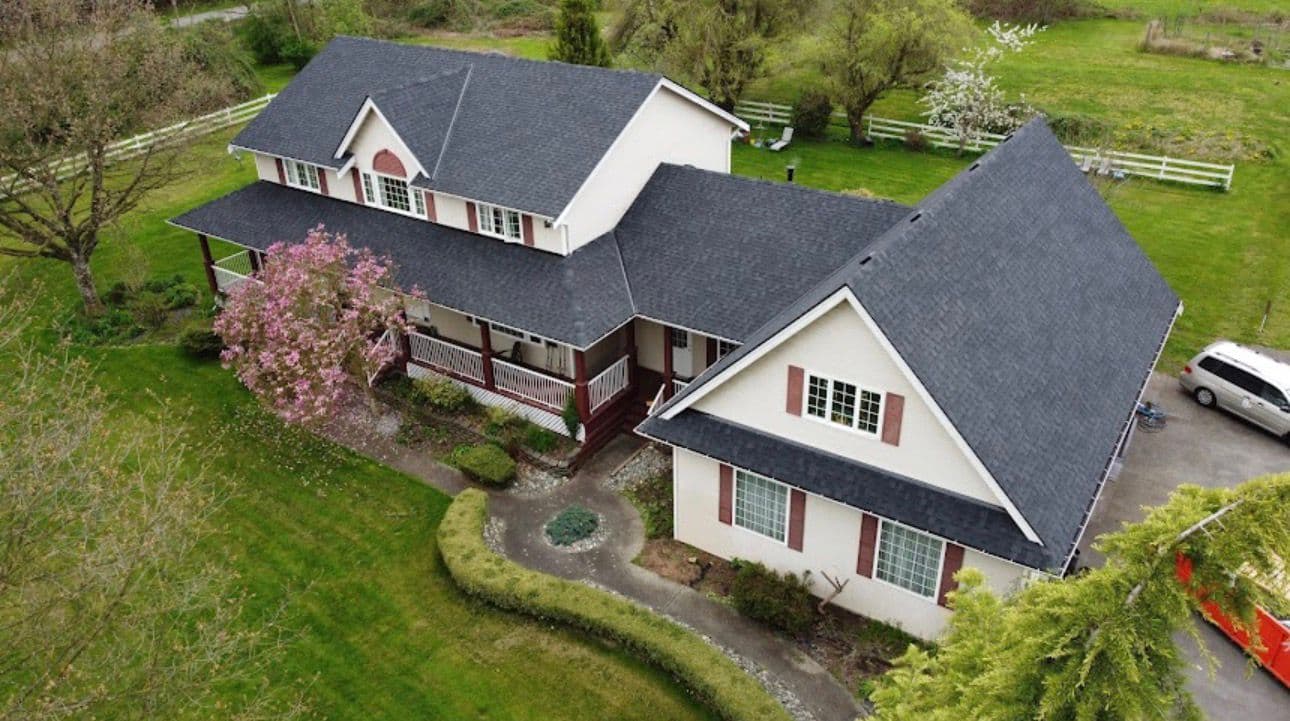
Nobody wants to spend twenty thousand dollars they did not need to spend. That is the real question underneath this one.
Most people who search this have noticed something. A stain on the ceiling, a few shingles in the yard after a windstorm, a neighbour's roof going in and a flyer through the door suggesting yours is next. What they actually want to know is whether this is a problem now, a problem soon, or not a problem at all.
So here is the honest version, written by people who inspect roofs in Richmond, Vancouver and Delta every week and who tell a good number of those homeowners that their roof is fine.
The short answer
A roof needs replacing when the covering has reached the end of its service life across the whole roof, or when the deck underneath has been compromised. Not when it has one leak. Not when it has moss. Not when it is a certain number of years old.
One failed detail is a repair. A roof that has failed as a system is a replacement. Almost every honest assessment comes down to working out which of those two you are looking at, and that is genuinely hard to do from the ground.
If you take one thing from this article: the number of separate problems matters more than the severity of any single one. One bad flashing detail on a fifteen-year-old roof is a Tuesday afternoon repair. Three unrelated failures on the same roof usually means the whole thing is done.
The seven signs that matter
These are the things worth paying attention to, roughly in the order we get asked about them. Note that only three of the seven mean you should act immediately.
 01Worth checking
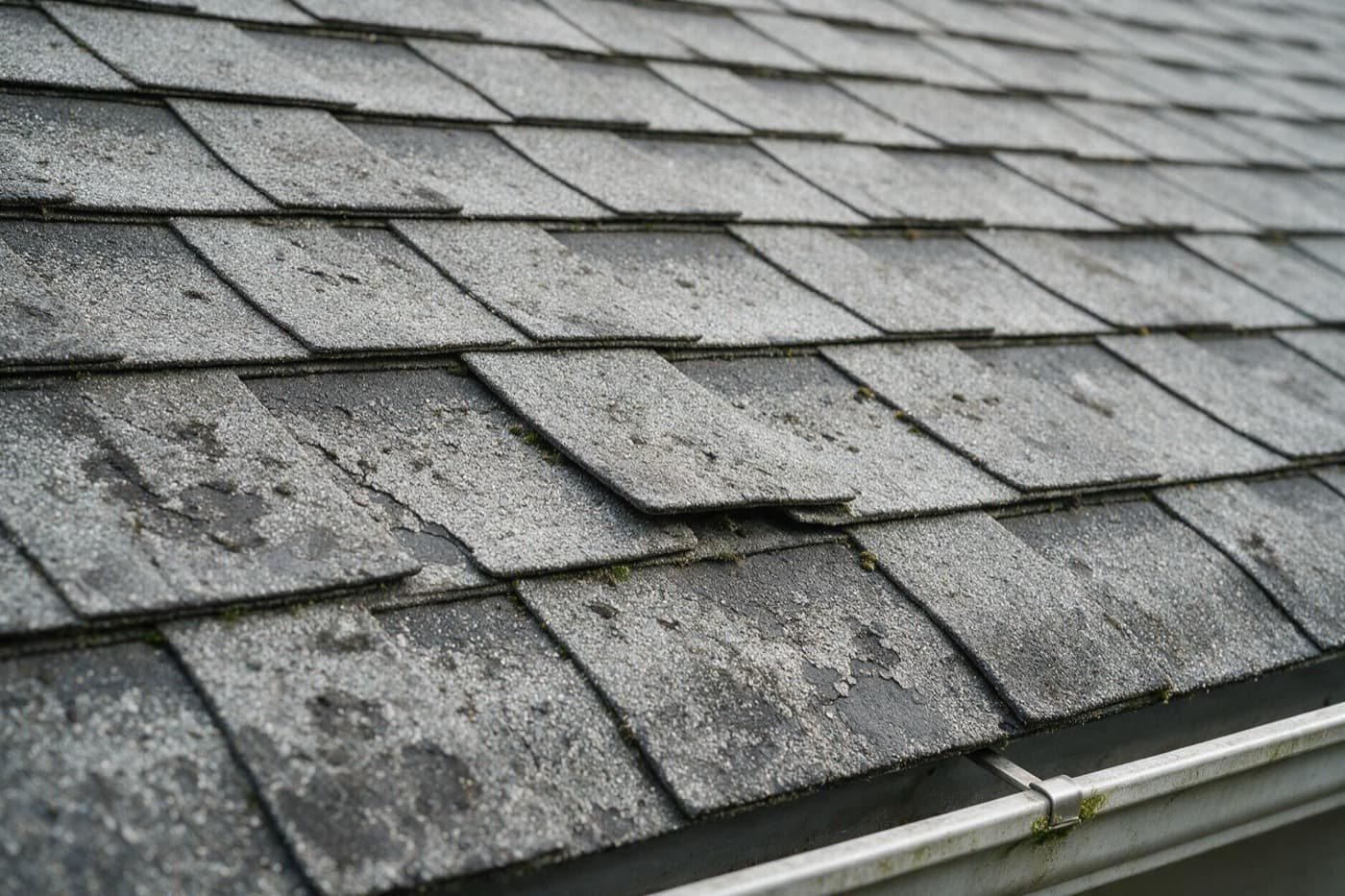
Your roof is past 15 years old
Age on its own does not condemn a roof, but it changes what you are looking for. Most asphalt shingle roofs in the Lower Mainland are installed with a 25 or 30 year rating and reach 15 to 25 in practice. Once you are past 15, an annual look is sensible. Past 20, it is worth knowing your options before the roof forces the decision for you in February.
 02Act soon
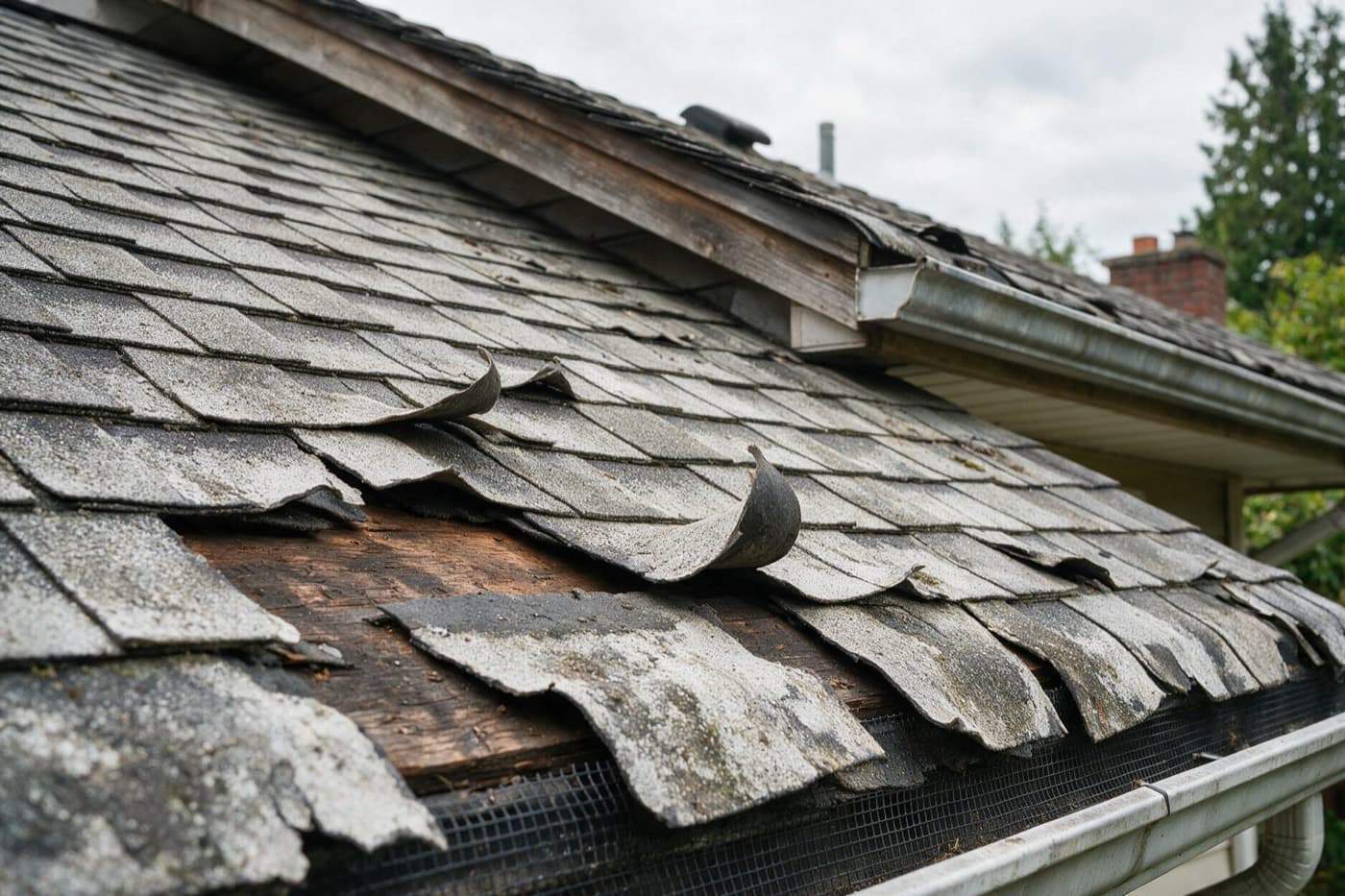
Shingles are curling, cracking or missing
Curling at the edges means the shingle mat has dried out and lost flexibility. Cracking means it has gone brittle. Missing shingles after a windstorm are usually a repair, but if they are coming off in more than one place, that is the roof telling you the fasteners no longer have much to hold on to. Widespread curling across a whole slope is one of the more reliable replacement signals there is.
 03Worth checking
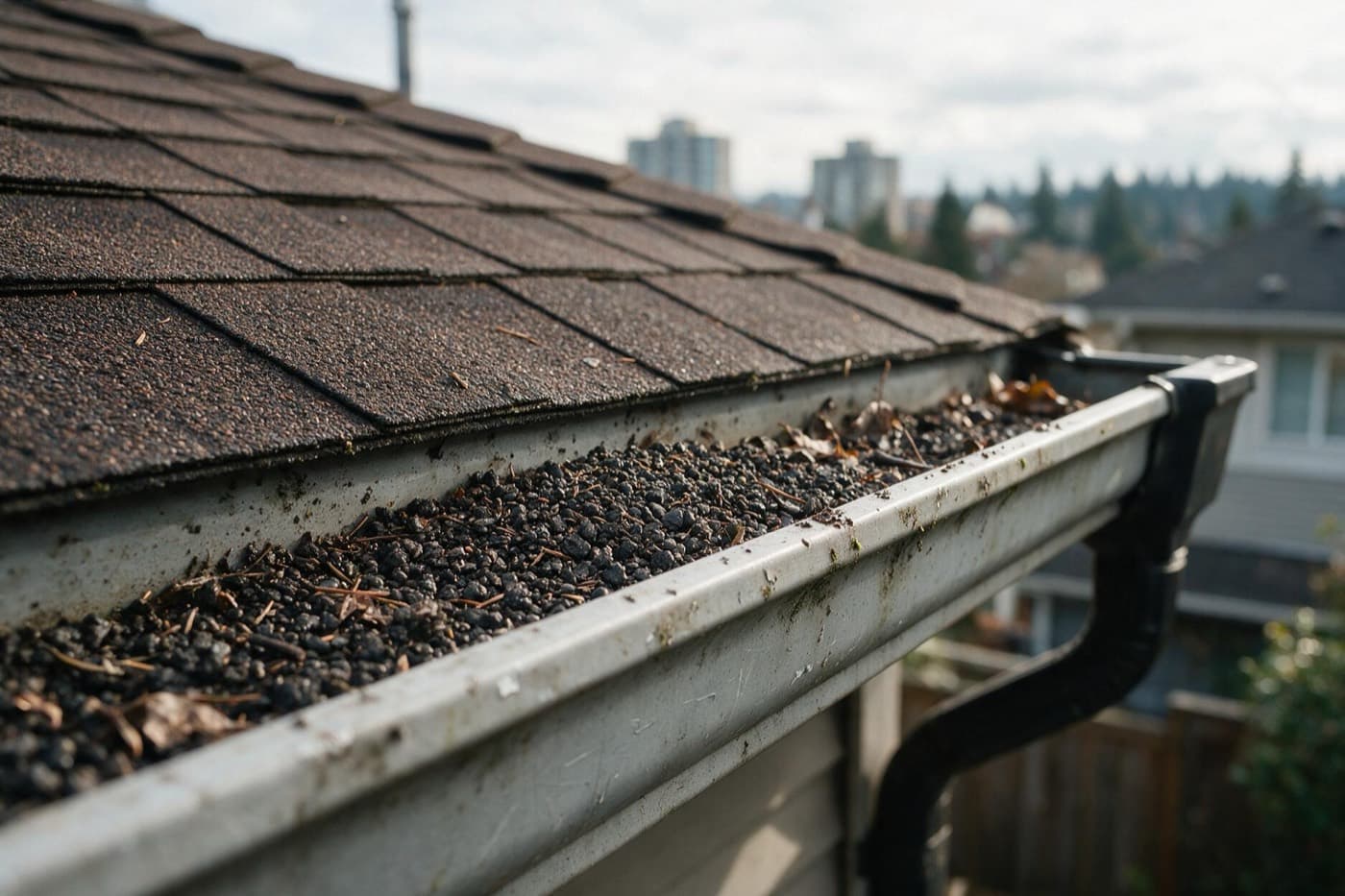
There are granules in your gutters
Those granules are the shingle's sunscreen. A handful after a new install is normal, that is loose material shedding. Consistent accumulation on an older roof is not: it means the asphalt underneath is now exposed and will harden and crack much faster. If you can see bald, shiny patches on the shingles themselves, the roof is in its final stretch.
 04Depends on how long
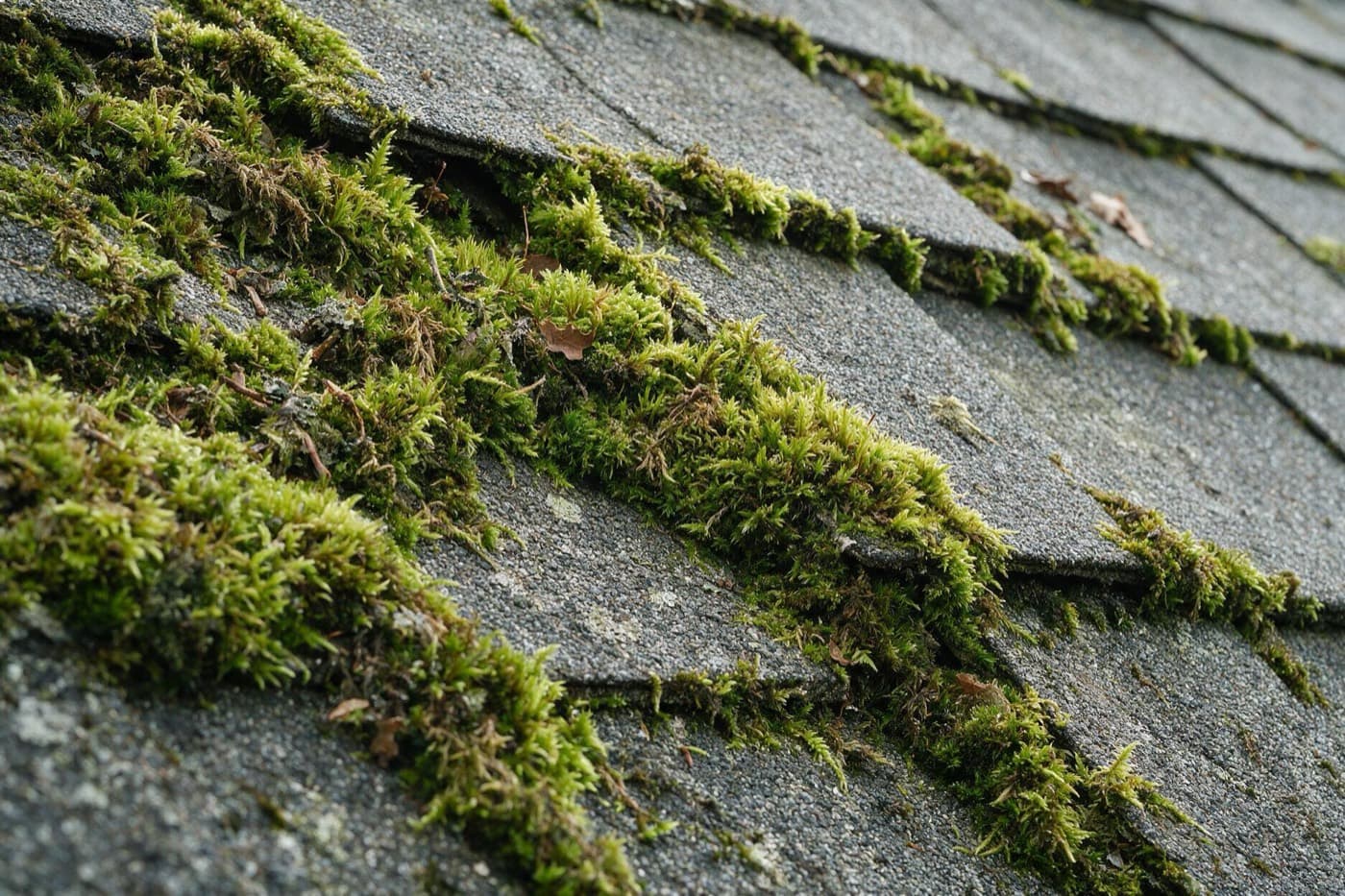
Moss has taken hold
This is the most misunderstood sign in this region, and the one most often used to sell an unnecessary roof. Moss on its own does not mean you need replacement. Moss holds moisture against the shingle and, over years, lifts the edges and lets water underneath. Caught early it is a cleaning and prevention job. Left for a decade on a north-facing slope, it will have done real damage underneath, and that is what an inspection is checking for.
 05Act now
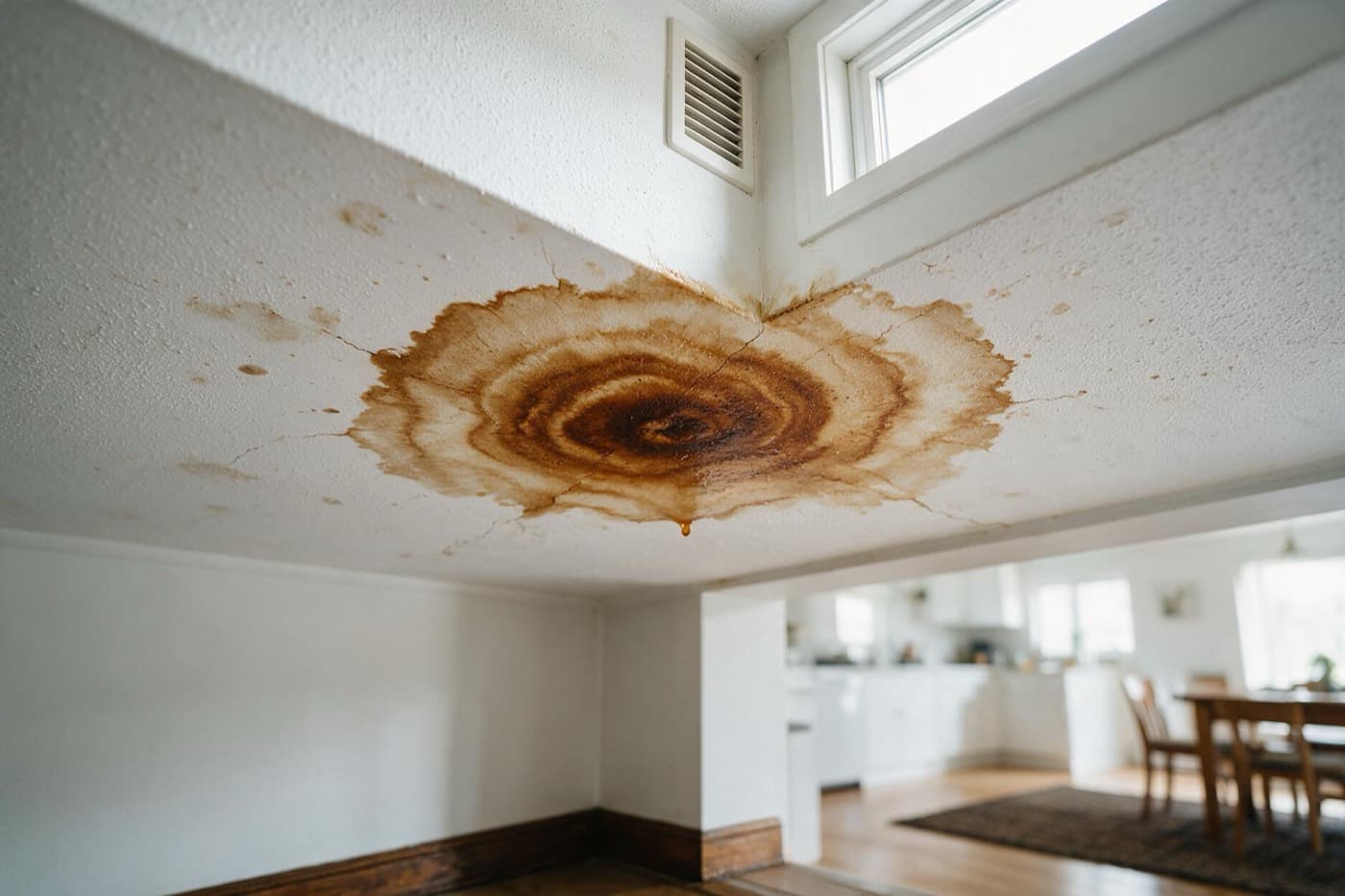
You have interior leaks or ceiling stains
A leak needs attention immediately, but it does not automatically mean replacement. Most of the leaks we trace come from a specific failed detail: flashing at a chimney or skylight, a valley, a vent stack boot that has perished. Those are repairs. What matters is whether it is one failure or the fifth one in three years. A roof that keeps finding new places to leak has usually reached the end.
 06Act now
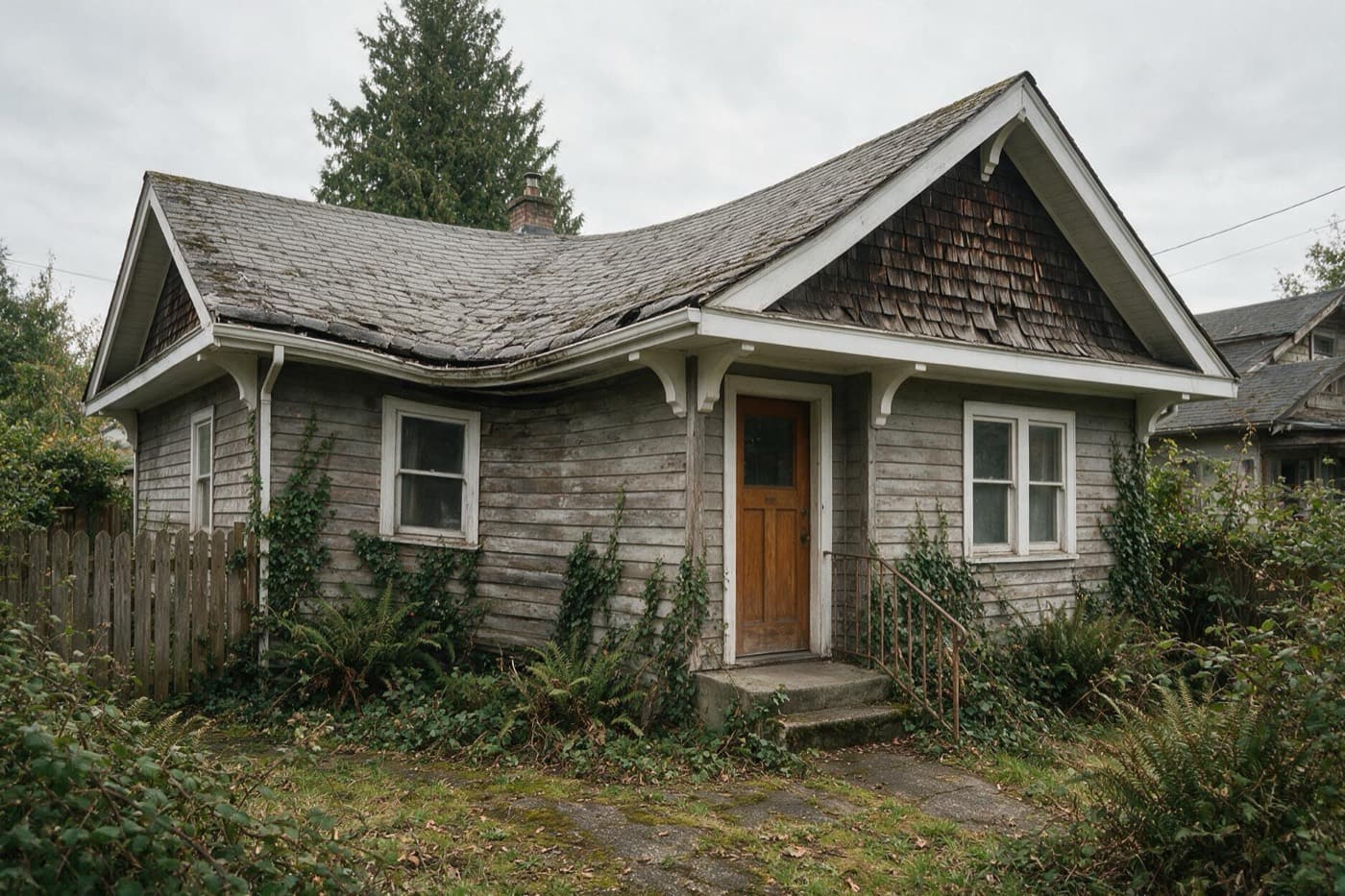
The roof line is sagging or dipping
This one is different from the others, because it is structural rather than cosmetic. A visible dip or wave in the roof line means the deck underneath has taken on moisture and lost strength, or the framing is under strain. It will not fix itself and it will not be solved by new shingles alone. Get it looked at promptly.
 07Act now
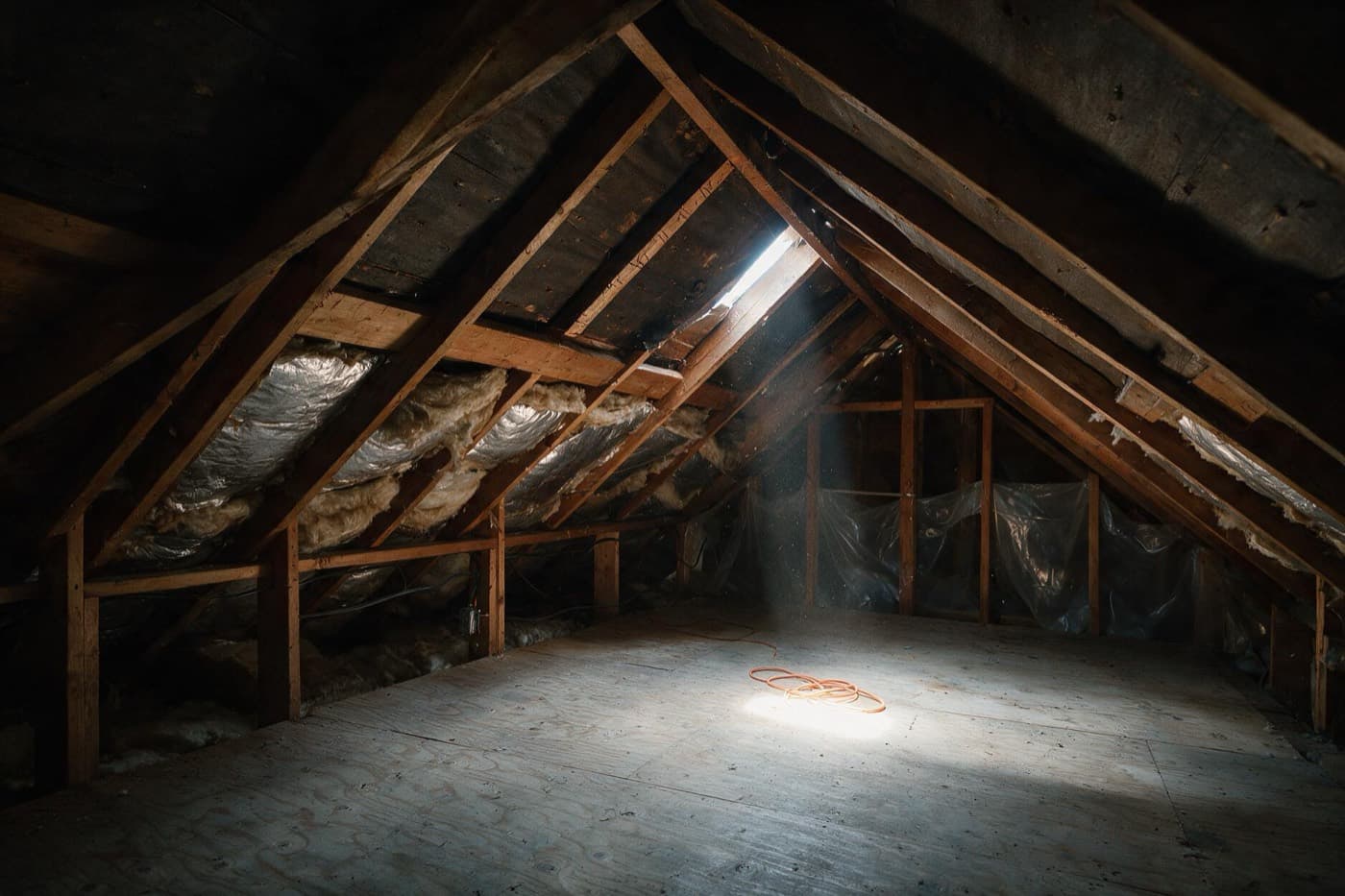
You can see daylight in the attic
If light gets in, water gets in. Go into the attic on a bright day with the lights off and look up. Daylight around vents, at the ridge or through the sheathing means there is a genuine hole in the building envelope. While you are up there, feel for damp insulation and look for dark staining on the underside of the deck, which is the clearest early warning you will get.
Why BC rain changes the maths
Vancouver gets around 1,153mm of rain a year. Most of the roofing advice you will find online is written for climates that get a third of that, and it does not transfer cleanly.
The problem in the Lower Mainland is not volume so much as duration. Rain here arrives as months of persistent damp rather than a few dramatic storms. Roofs rarely get properly dry between October and April. That sustained moisture is what drives the two failure modes we see constantly: organic growth on shaded slopes, and slow saturation of anything that was installed slightly wrong in the first place.
It is also why the manufacturer's rating on the packaging is close to meaningless here. A shingle rated for 30 years is rated under test conditions. In a wet coastal climate on a north-facing slope with mediocre attic ventilation, the same shingle might give you 15. Two identical roofs installed the same week on the same street can be in completely different condition twenty years later, purely because one gets afternoon sun and the other sits under a cedar.
Ventilation deserves a specific mention. A lot of the roofs we condemn early were not killed from above by rain, they were killed from below by condensation, because the attic could not breathe. If your roof is being replaced, the ventilation should be assessed at the same time, and any contractor who does not mention it is not thinking about the second half of the roof.
How long roofs actually last here
Realistic service life in the Lower Mainland, based on what we see rather than what the box says:
| Material | Typical life here | What shortens it |
|---|---|---|
| Three-tab asphalt shingle | 15 – 20 years | Shade, moss, poor ventilation |
| Architectural asphalt shingle | 20 – 25 years | North-facing slope, tree cover |
| Torch-on / SBS flat roof | 15 – 25 years | Ponding water, failed seams |
| Cedar shake | 15 – 30 years | Constant damp, lack of maintenance |
| Metal roofing | 40 – 50 years | Coastal salt air on fasteners |
If your roof is inside these ranges and you have no active symptoms, you very likely do not need to do anything except keep an eye on it.
When a repair is the right call
A repair is usually the honest answer when all of the following are true:
- The damage is confined to one area rather than spread across the roof
- The rest of the covering is still flexible and holding its granules
- The deck underneath is sound and dry
- The roof is comfortably inside its expected service life
- You have not repaired the same roof repeatedly in recent years
In that situation a repair will typically buy you several more years for a small fraction of replacement cost. If a repair extends your roof's life by five years, that is what we recommend, and that is what we quote for. We do this often enough that it is what most of our referrals come from.
When replacement is unavoidable
And the other side of it. Replacement is genuinely the right call when:
- Shingles are curling, cracking or bald across whole slopes rather than in patches
- The deck has softened or you can see sagging in the roof line
- You are on your third or fourth repair to the same roof in a few years
- There are multiple unrelated failure points appearing at once
- There is an existing second layer and the covering has failed again
At that point continuing to repair is throwing money at a roof that has already made its decision. The useful thing to know is that this is rarely an emergency if you catch it in the summer. A roof at the end of its life in August is a planned project. The same roof in January is an urgent one, and urgent work costs more and gets done in worse conditions.
What an honest inspection looks like
You cannot answer this question properly from the ground, and you should be wary of anyone who tries. A real inspection means getting on the roof, checking the flashings and penetrations individually, and where the roof warrants it, going into the attic to look at the underside of the deck and the ventilation.
What you should get at the end of it is a clear account of the roof's condition and remaining life, and an itemised estimate separating what needs doing now from what can wait. If a contractor will not put their numbers in writing, that is worth noticing.
Ours is free, it takes about an hour, and it commits you to nothing. A good share of the time the answer is that the roof is fine and we will see you in a few years.
Free inspection
We will give you the answer either way
If your roof does not need replacing, that is what the report will tell you. Free site visit, a straight answer on remaining roof life, and a free itemised estimate within 24 hours if you do need work. Serving Richmond, Vancouver, Delta and the wider Lower Mainland.
Common questions
Most asphalt shingle roofs here last 15 to 25 years. The range is wide because slope, ventilation, shade and shingle quality matter more than the manufacturer's rating. A well-ventilated south-facing roof with good quality architectural shingles can reach 25 years or more. A north-facing slope under trees with poor attic ventilation might be finished at 15.
Not on its own. Moss is close to universal on shaded Lower Mainland roofs. What matters is how long it has been there and whether it has started lifting shingle edges and letting water underneath. Caught early it is a cleaning and prevention job. Left for many years it can cause real damage. Any contractor who quotes a full replacement on the basis of moss alone, without getting on the roof to check what is happening underneath, is selling rather than diagnosing.
Very often, yes. If the damage is localised, the rest of the roof still has life in it and the deck is sound, a repair is the right answer and will typically buy several more years. Replacement makes sense when the covering is at the end of its life across the whole roof, the deck has taken on moisture, or you are repeatedly repairing the same roof.
It depends on the size and pitch of the roof, the number of storeys, the material you choose and what condition the deck underneath turns out to be in. That is why we inspect free and give you an itemised written estimate within 24 hours rather than quoting a number over the phone that changes once someone gets up there.
The site visit and the estimate are both free and carry no obligation. You get a thorough look at the roof and a straight answer about how much life is left in it. If your roof does not need replacing, that is what we will tell you. A detailed written condition report, with photographs and a remaining-life assessment, is available as a separate paid service.
Late spring through early autumn, when there are consecutive dry days to work with. August and September are the practical window in the Lower Mainland: the weather is still reliable and the work gets finished before the serious rain arrives in October. If your roof is marginal going into the winter, it is much better to deal with it in September than to discover the problem in January.