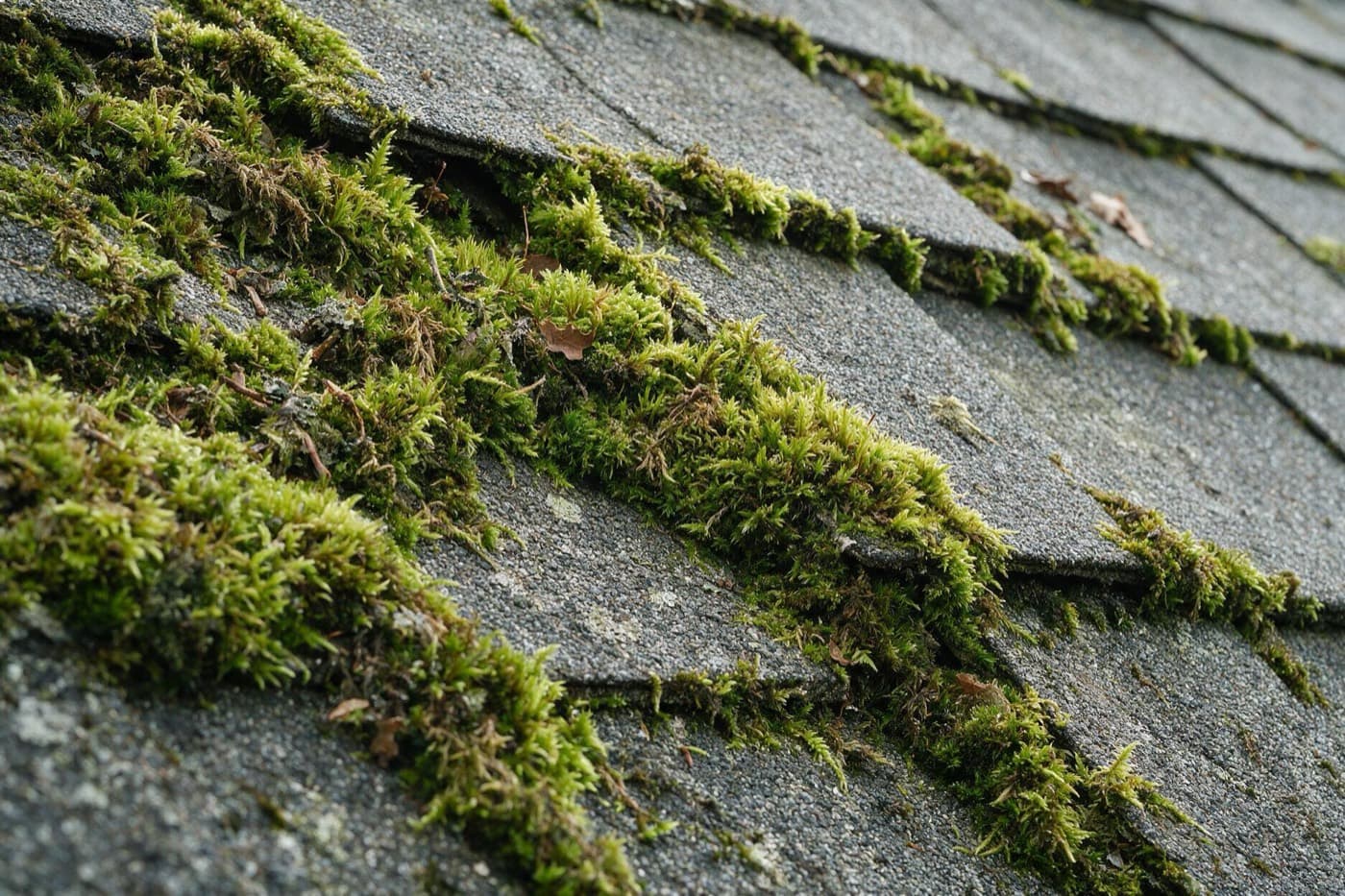
Moss on your roof does not mean you need a new roof.
We are starting there because it is the single most common reason a Lower Mainland homeowner gets talked into a replacement they did not need. Moss is visible from the ground, it looks like neglect, and it photographs well on a flyer. It is the easiest thing in roofing to weaponise.
It is also close to universal here. On a shaded north-facing slope in Vancouver, Burnaby or North Delta, moss is the default state of a roof left alone for a few years. Its presence tells you almost nothing on its own.
What matters is how long it has been there and what it has done underneath. That is a real question with a real answer, and this article is about how to tell the difference.
The straight answer
Moss caught within a few years is a maintenance job. It gets treated, the dead growth comes off, and a preventative strip near the ridge slows it coming back. Cost is in the hundreds and the roof carries on with its normal service life.
Moss left for a decade on a slope that never dries is a different conversation, because by then it may have lifted shingle edges and let water underneath repeatedly. The damage in that case is not the moss. It is everything the water did while the moss held the door open.
If someone quotes you a full replacement on the basis of moss visible from the driveway, without getting on the roof and checking what is happening under the shingle edges, they are selling rather than diagnosing. That is worth saying plainly.
How moss actually damages a roof
Moss is not eating your shingles. There is no chemical attack and no rot in the way people imagine. The mechanism is purely mechanical, and understanding it is what lets you judge your own roof sensibly.
First, moss holds water. A shingle is designed to shed rain within minutes. A cushion of moss sitting on it acts like a sponge, keeping the surface saturated for days after the rain has stopped. Sustained wetness is what accelerates the breakdown of the shingle mat and the loss of granules.
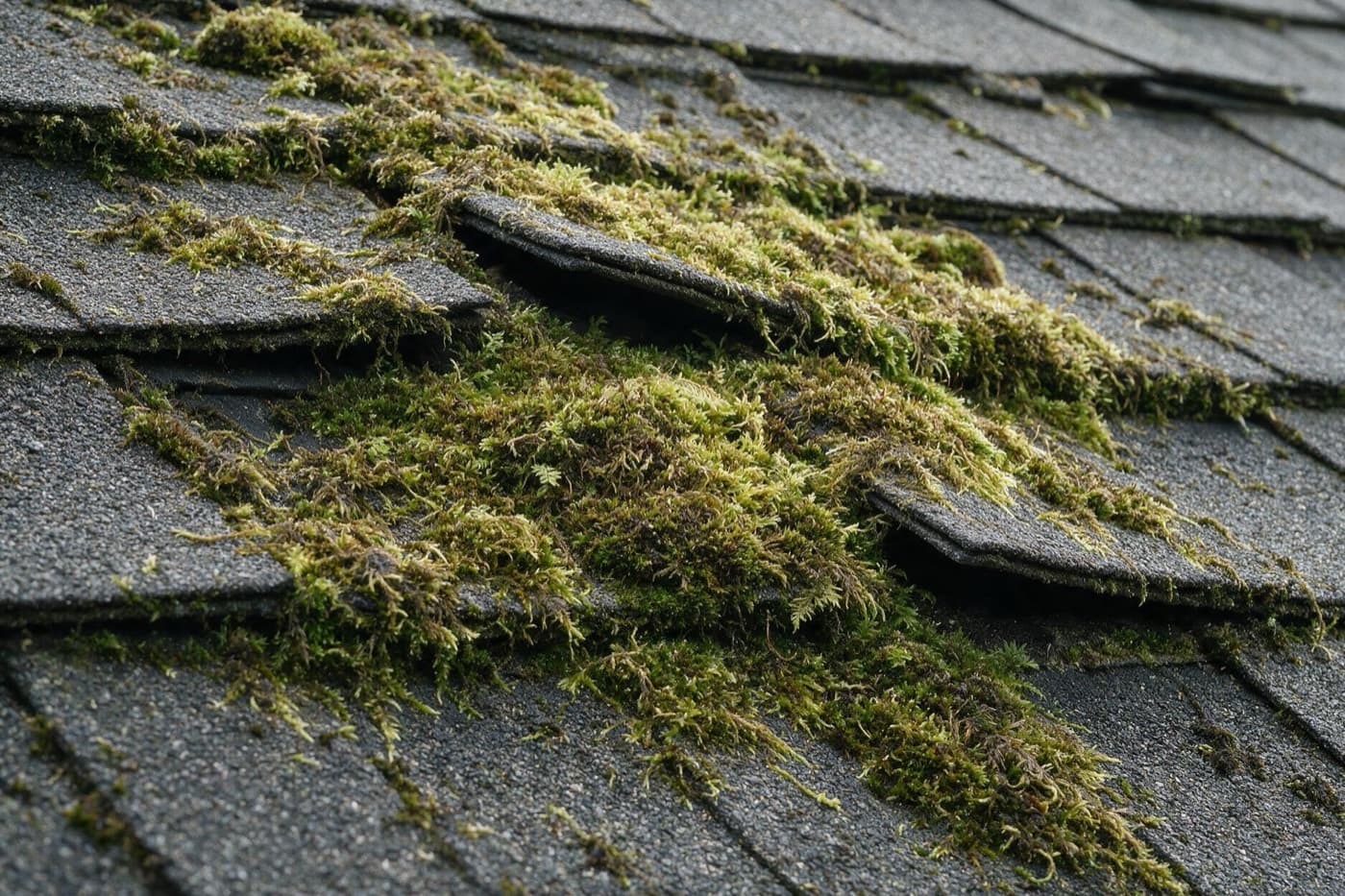
Second, and more seriously, moss grows into gaps. It establishes along the bottom edge of a shingle course, works its way under the tab above, and as the cushion thickens it levers that tab upward. Now there is a lifted edge where the roof was designed to lie flat, and wind-driven rain can get beneath it.
That is the whole problem in one sentence: moss does not damage shingles, it creates the gap that lets water do the damage.
Telling early growth from real damage
You can get a long way on this from the ground with a decent pair of eyes, and further with binoculars.
Probably fine
- Green or black film sitting flat on the shingle surface
- Growth confined to the shaded slope or the north side
- Shingle courses still lying flat with clean lines
- Moss in the gutters but not established on the roof itself
Worth a proper look
- Cushions of moss standing proud of the shingle surface
- Shingle edges visibly lifted, curled or no longer in line
- Growth spreading beyond the shaded slope
- Granules collecting heavily in the gutters
- Any interior staining on ceilings below that slope
The single most useful test is the line of the shingle courses. Moss sitting on top of a roof whose courses are still straight and flat is a cleaning job. Moss on a roof where the lines have gone wavy and tabs are standing up has already done something, and what it has done needs looking at from above.
When removal is all you need
For most roofs in this region, most of the time, it is. The work is unglamorous: a proprietary moss treatment applied to the affected slopes and left to do its job, then the dead growth brushed or blown off once it has died back. It is deliberately slow, because slow is what protects the shingle.
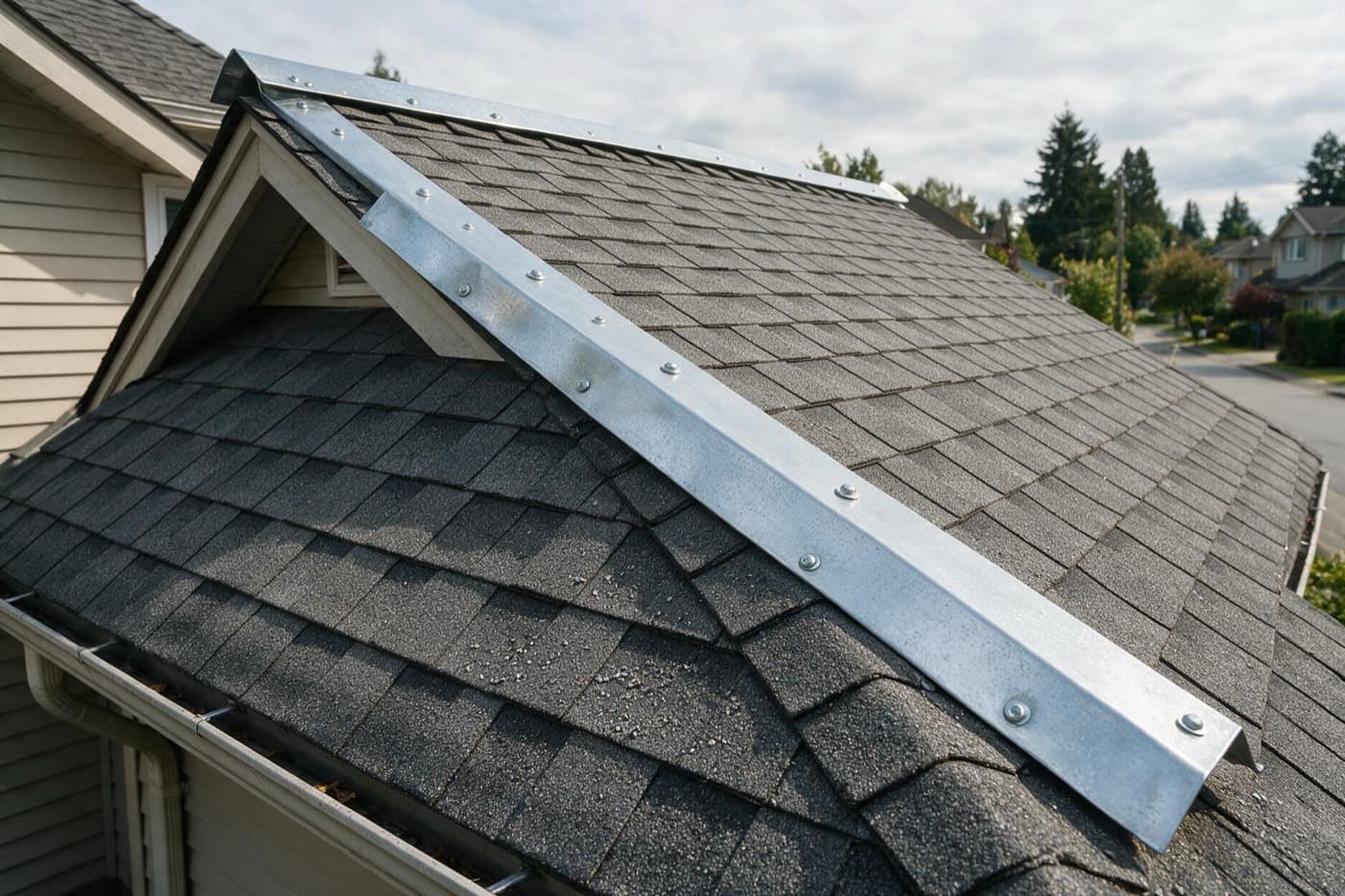
The prevention step matters as much as the clean. A zinc or zinc-alloy strip fitted near the ridge releases trace metal into rainwater running down the slope, which suppresses regrowth on everything below it. It is inexpensive, it is fitted in an hour, and on a shaded slope it is the difference between doing this every two years and every five.
Do not pressure wash an asphalt roof.
It is the fastest way to turn a maintenance problem into a replacement. The pressure strips the granule layer that protects the asphalt from UV, and it drives water up under the shingle courses. The roof looks immaculate for a season and then ages several years in one. We are called out to the consequences of this more often than to the moss itself.
When an inspection is warranted
Get someone on the roof if the shingle lines have gone wavy, if tabs are visibly lifted, if there is any staining on the ceiling below that slope, or if you simply do not know how long the moss has been there because you bought the house three years ago.
What that visit establishes is whether water has been getting under the lifted edges, and whether the deck beneath has taken on moisture. Those are the two questions that decide between a clean, a repair and a replacement, and neither can be answered from the driveway.
Our site visit is free and commits you to nothing. If the answer is that your roof needs a clean and a zinc strip, that is what we will tell you, and we do not do moss removal, so we have no reason to tell you anything else. If it needs a repair you get a free itemised estimate for that repair. Detailed written condition reports are available as a separate paid service if you need one for a sale or a strata.
If you want the wider picture, the full list of warning signs is in how to know if your roof needs replacing, and realistic service life by material is in how long a roof lasts in Vancouver.
Free site visit
We will tell you if it is just moss
Free site visit, a straight answer on what the moss has actually done, and a free itemised estimate only if there is work worth doing. Serving Richmond, Vancouver, Delta, Surrey and the wider Lower Mainland.
Common questions
No, not on its own. Moss is close to universal on shaded Lower Mainland roofs and its presence tells you almost nothing by itself. What matters is how long it has been there and whether it has started lifting shingle edges. Caught early it is a cleaning and prevention job. Any contractor who quotes a full replacement on the basis of moss alone, without getting on the roof to check underneath, is selling rather than diagnosing.
Yes, but slowly and by a specific mechanism. Moss holds water against the shingle instead of letting it run off, and as it thickens it grows under the bottom edge of the course above and levers it upward. Once a tab is lifted, wind-driven rain gets underneath it. The damage is the water ingress, not the plant.
Gently. Moss is normally treated rather than scraped: a proprietary moss treatment applied and left to work, with the dead growth brushed or blown off afterwards. Never pressure wash an asphalt roof. It strips the protective granules and will take years off the covering, which is a far more expensive problem than the moss was.
Please do not. A pressure washer removes the granule layer that protects the asphalt underneath from UV and weather. It also drives water up under the shingle courses. It looks effective for about a season and then the roof ages noticeably faster. This is one of the most common ways homeowners shorten their own roof by several years.
They help. A zinc or zinc-alloy strip fitted near the ridge releases trace amounts of metal in rainwater as it runs down the slope, which suppresses regrowth. It is not a cure for a roof that is already heavily covered, and it works best on the area below the strip, but as prevention after a clean it is inexpensive and effective.
On a shaded or north-facing slope, expect to deal with it every two to four years. In the open with good sun exposure it may never become a problem. Rather than working to a schedule, look at the roof each autumn: light green film is fine to leave, thick cushions sitting proud of the shingle are worth treating.